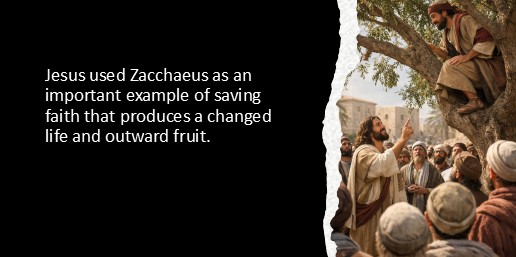
We often relegate Zacchaeus to a children’s nursery rhyme or childish song, but Jesus used Zacchaeus as an important example of saving faith that produces outward fruit. This is one of the clearest pictures in all of Scripture of what genuine repentance looks like. It is not merely a feeling. It is not empty words. It is a transformed heart that produces visible, measurable change. Let’s do a deeper dive into this important Bible account to learn more about Zacchaeus making restitution for sins that he committed before he was saved.
We join Jesus in Luke 19:1 as he passes through Jericho on his way to Jerusalem for the last Passover.
Zacchaeus was not a morally confused man trying his best. He was a chief tax collector, wealthy, powerful, and widely known as a sinner (Luke 19:2). Tax collectors were notorious for fraud and extortion. The crowd’s reaction to Jesus entering his home was not random criticism, but a reflection of Zacchaeus’ well-earned reputation.
And yet, in a moment of divine grace, everything changed.
This passage teaches us a vital doctrine often neglected today: the theology of restitution, the idea that true repentance does not merely confess sin but seeks to make things right.
1. A Sovereign Savior Seeks a Sinful Man
Jesus said, “I must stay at your house today.” This was not a casual decision. It reflects divine necessity. Just as Jesus “had to go through Samaria” to reach the woman at the well (John 4:4), He had a divine appointment with Zacchaeus.
Zacchaeus thought he was seeking Jesus, but in reality, Jesus was seeking him.
Scripture confirms that this is always the pattern. “There is none that seeketh after God” (Romans 3:11). Salvation begins with God’s initiative, not man’s effort.
Zacchaeus was a “precious lost sinner in the eyes of Jesus”. This is the heart of the gospel. Christ came not to affirm the righteous, but to seek and save the lost (Luke 19:10).
2. A New Heart Produces a New Posture
When Zacchaeus encounters Jesus, his first response is not theological debate. It is submission.
He calls Jesus “Lord!” This is significant. The Greek word kyrios means master, ruler, one with authority. Zacchaeus is no longer living for himself. He is yielding to Christ. Romans 10:9-10 connects this directly to salvation: confessing Jesus as Lord is the outward expression of inward faith.
His posture also changes emotionally. Luke tells us he received Jesus “joyfully” (Luke 19:6). This stands in stark contrast to the rich young ruler, who walked away from Jesus “sorrowful” (Matthew 19:22).
The difference is not wealth. The difference is the heart.
3. True Repentance Produces Radical Generosity
Zacchaeus declares, “Behold, Lord, the half of my goods I give to the poor” (Luke 19:8).
This is not a small gesture. This is a massive, life-altering decision.
The verb “I give” (Greek: didōmi, present active indicative) indicates a decisive, active commitment. It is not describing a vague past habit. In fact, it would be unreasonable to think Zacchaeus had been doing this all along, since repeatedly giving half his wealth would quickly leave him with nothing.
Instead, this is best understood as the immediate fruit of repentance.
John the Baptist had already taught this principle: “Bring forth therefore fruits worthy of repentance” (Luke 3:8). Zacchaeus is doing exactly that.
His generosity is not the cause of his salvation. It is the evidence of it.
As one commentator explains, Zacchaeus is not defending himself but “announcing a change in his life’s direction” .
4. Restitution: Repentance That Makes Things Right
Zacchaeus continues, “If I have taken anything from anyone by false accusation, I restore him fourfold” (Luke 19:8).
This statement is the clearest expression of the theology of restitution.
Understanding the Language
The phrase “if I have defrauded” uses a Greek aorist verb (esykophantēsa), pointing to real past actions, not hypothetical innocence. This is not a man saying, “I might have made a mistake.” This is a man acknowledging a pattern of sin.
The verb “I restore” (apodidōmi, present active indicative) expresses a decisive, immediate commitment.
This is not delay. This is not negotiation. This is repentance in action.
Understanding the Law
Under the Mosaic Law, restitution varied depending on the situation:
- Voluntary confession required repayment plus one-fifth (Leviticus 6:5)
- Theft could require double repayment (Exodus 22:4)
- More serious theft required fourfold repayment (Exodus 22:1)
Zacchaeus chooses the highest standard.
He does not minimize his sin. He maximizes his repentance.
As noted in the commentary, “he offered to pay the highest price because his heart had truly been changed” .
The Theology Behind Restitution
Restitution is not about earning forgiveness. Scripture is clear that salvation is by grace through faith alone (Ephesians 2:8-9).
However, restitution is about restoring what sin has broken.
Sin is not abstract. It damages real people. It creates real consequences. True repentance seeks to repair those consequences wherever possible.
This principle appears throughout Scripture:
- Exodus 22:1 teaches restitution for theft
- Numbers 5:7 commands confession and repayment
- Luke 3:12-13 calls tax collectors to honest dealing
Zacchaeus embodies all of this in one moment.
5. Salvation Confirmed by Transformed Living
Notice what Jesus does not say.
He does not say, “Salvation will come after you repay everyone.”
He does not say, “You are saved because of your generosity.”
He declares salvation after seeing the evidence of a changed heart.
This aligns with the consistent teaching of Scripture. Salvation is by grace through faith, but genuine faith produces transformation (2 Corinthians 5:17; James 2:17). Accepted in Christ, Transformed by Grace (Understanding Positional Acceptance and Progressive Sanctification)
Zacchaeus was not saved by restitution. He made restitution because he was saved.
The statement “today” emphasizes the immediacy of this transformation. A real encounter with Christ produces real change.
6. The Mission of Christ: Seeking and Saving the Lost
This is the key to the entire passage.
Zacchaeus was not one of the “ninety-nine righteous” who think they need no repentance (Luke 15:7). He was lost. And now he is found. The Restless Seeker (A Journey from Predestined Reprobate to Whosoever Will)
This story stands in direct contrast to the rich young ruler in Luke 18. One man clings to his wealth and walks away in sorrow. The other releases his wealth and receives salvation with joy.
The difference is not external circumstances. The difference is surrender.
Practical Application: What Restitution Looks Like Today
The theology of restitution still applies.
If we have wronged others through dishonesty, manipulation, theft, or harm, repentance involves more than saying “I’m sorry.” It involves making things right where possible.
This may include:
- Returning what was taken
- Repairing damage caused
- Confessing wrongs to those affected
- Changing patterns of behavior
Not every situation can be fully restored, but the heart of repentance seeks restoration wherever possible.
At the same time, we must be clear: restitution does not save us. Only Jesus saves.
But if Jesus has truly saved us, our lives will begin to reflect His righteousness. Please read 7 Characteristics of a Real, Genuine, Sincere Apology
Conclusion: A Changed Heart, A Changed Life
Zacchaeus teaches us that salvation is not theoretical. It is transformational.
When Jesus enters a life, everything changes. Pride becomes humility. Greed becomes generosity. Theft becomes restitution.
This is the power of the gospel.
Zacchaeus went from being a notorious sinner to a joyful servant of Christ in a single day. Not because he cleaned himself up first, but because Jesus sought him, saved him, and changed him.
The question for us is simple.
Has that same transformation taken place in us?
If it has, then like Zacchaeus, we will not only confess Christ as Lord, we will begin to live as though He truly is.
Someday, I expect to be able to sit down with Zacchaeus in heaven and hear about how he worked out his salvation through discipleship for the rest of his life.