Conversational Steering: A Gentle Way to Include a Dominant Participant
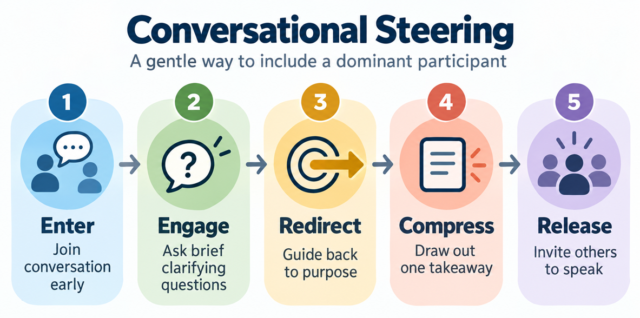
Conversational Steering: A gentle way to include a highly verbal dominant participant

Conversational steering offers small-group leaders a gracious way to include a dominant participant without embarrassment. By entering, engaging, redirecting, compressing, and releasing the conversation, leaders preserve dignity, encourage balanced participation, keep discussions focused, and promote biblical edification for everyone present. Continue ReadingConversational Steering: A Gentle Way to Include a Dominant Participant→

When the Problem Fills the Frame: Seeing Life from God’s Perspective

Has one problem ever filled the entire frame of your life? Scripture helps us step back, see our circumstances from God’s perspective, and remember that even painful troubles are never greater than His presence, wisdom, and faithful care.

Has one problem ever filled the entire frame of your life? Scripture helps us step back, see our circumstances from God’s perspective, and remember that even painful troubles are never greater than His presence, wisdom, and faithful care. Continue ReadingWhen the Problem Fills the Frame: Seeing Life from God’s Perspective→

The Daily Practice of Looking to Christ for Perspective

Does one concern keep crowding out everything else? The daily practice of looking to Christ redirects our attention through Scripture, prayer, fellowship, and obedience, helping us rest in His presence when life feels overwhelming.

Does one concern keep crowding out everything else? The daily practice of looking to Christ redirects our attention through Scripture, prayer, fellowship, and obedience, helping us rest in His presence when life feels overwhelming. Continue ReadingThe Daily Practice of Looking to Christ for Perspective→

Denominate, Denomination, Denominationalism, and the Myth of Non-Denominationalism

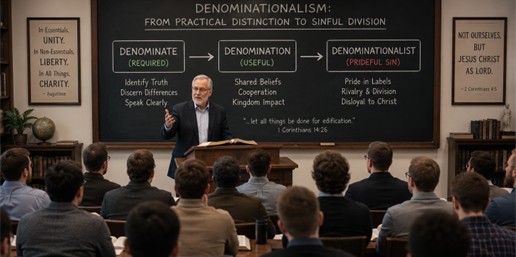
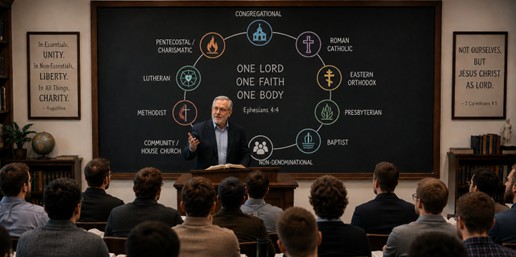
The myth of non-denominationalism hides an important truth: every church has doctrine, history, leadership, traditions, and boundaries. Learn when practical distinctions are biblical, when denominations are useful, and when denominationalism becomes sinful division.

The myth of non-denominationalism hides an important truth: every church has doctrine, history, leadership, traditions, and boundaries. Learn when practical distinctions are biblical, when denominations are useful, and when denominationalism becomes sinful division. Continue ReadingDenominate, Denomination, Denominationalism, and the Myth of Non-Denominationalism→

Denominate, the Practical Need to Identify and Distinguish

A denomination unites churches through shared doctrine, history, leadership, and ministry. Such cooperation can strengthen missions, training, and accountability, but it becomes dangerous when institutional authority competes with Scripture, conscience, or the lordship of Jesus Christ.

Every church must identify what it believes. To denominate means to name and distinguish doctrine, leadership, and practice. Biblical clarity requires honest distinctions, but every label must remain humble, truthful, and subordinate to Scripture. Continue ReadingDenominate, the Practical Need to Identify and Distinguish→