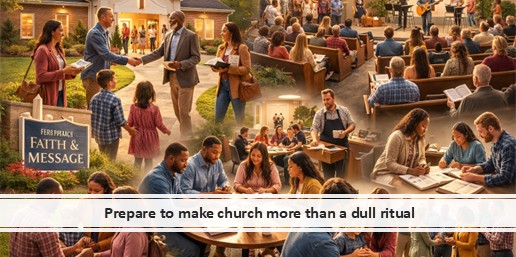
Prepare to Be Early – “Seek ye first the kingdom of God, and his righteousness” (Matthew 6:33). To prepare to be early is not merely about time management; it is about priority. Jesus teaches that the kingdom must come first. When we rush into worship distracted and unprepared, we reveal what has truly occupied first place in our hearts. Being early allows us to quiet our minds, pray, and reflect before the service begins. It communicates to our families and to others that gathering with God’s people is not an afterthought but a sacred appointment. In Scripture, the word “seek” (Greek, zēteō) means to pursue earnestly. That pursuit should shape our weekly rhythm. When we intentionally prepare ahead of time, we demonstrate that Christ reigns over our schedules. Ask yourself, “What changes would I make if I truly believed meeting with God’s people was a divine priority?” Honor the Lord not only with your lips in worship, but with your planning before worship.
Prepare to Be Ready – The soil of the heart determines the fruit of the Word. Before hearing a sermon, we should prayerfully ask God to prepare us to receive it. James tells us to “receive with meekness the engrafted word” (James 1:21). Meekness means humility and teachability. If you know the subject of the message beforehand, read the passage during the week. Pray, “Lord, open mine eyes, that I may behold wondrous things out of thy law” (Psalms 119:18). The Holy Spirit, who inspired Scripture, also illumines it (John 16:13). Being ready is not passive; it is an act of faith. Remove distractions. Confess known sin. Come expecting God to speak through His Word. The Bereans were commended because they received the Word with readiness of mind (Acts 17:11). A ready heart is fertile ground for growth. Instead of evaluating the sermon, let the Word evaluate you. Ask, “Lord, what are You saying to me?” When we prepare spiritually, we position ourselves to hear from God clearly and obediently.
Prepare to Serve – Jesus said, “The Son of man came not to be ministered unto, but to minister” (Matthew 20:28). The word “minister” means to serve. Christlikeness is measured not by how much we are served, but by how much we serve. The church is not a performance to attend but a body to participate in. In 1John 4:7–8 we are reminded that love originates in God, and love acts. Preparing to serve means asking before you arrive, “How can I reflect Christ today?” It may involve greeting visitors, helping with practical needs, praying with someone, or serving in a ministry role. True service flows from the gospel. Because Christ served us at the cross, we gladly serve others. Service crucifies pride and cultivates humility. Instead of asking, “What will I get out of church?” ask, “Whom can I bless?” When each believer imitates Christ’s servant heart, the church becomes a living testimony of His love.
Prepare to Contribute – Ephesians 4:16 teaches that the whole body grows “when every part does its share.” God has given each believer a spiritual gift at the moment of salvation (1 Corinthians 12:13). These gifts are not for self-promotion but for edification. The word “edify” means to build up. When you withhold your gift, the body is weakened. Preparing to contribute means recognizing that you are necessary in God’s design. Pray for discernment about how your abilities, resources, and encouragement can strengthen others. Contribution includes singing wholeheartedly, giving faithfully, participating attentively, and encouraging sincerely. Christianity is not a spectator faith. The church flourishes when every member functions. Consider how different a congregation would be if each person arrived thinking, “My role today matters.” God sovereignly arranged the body as He pleased (1 Corinthians 12:18). Embrace your place with gratitude and responsibility.
Prepare to Change – Acts 17:11 commends believers who searched the Scriptures daily to confirm what they heard. The sermon is not the end of your study; it is the beginning. The Greek word for repentance, metanoia, means a change of mind that leads to a change of direction. God’s Word is given to transform us, not merely inform us. Take notes. Review the passage later in the week. Study the broader context. Ask how it fits within the whole counsel of God. According to 2 Timothy 3:16-17, Scripture is profitable for doctrine, reproof, correction, and instruction in righteousness. If we resist correction, we resist growth. The Spirit uses the Word to sanctify us (John 17:17). Preparation to change requires humility and willingness. Instead of defending your current habits, ask God to conform you to Christ. Worship without transformation becomes ritual. True hearing produces spiritual fruit.
Prepare for Action – Jesus said, “Blessed are they that hear the word of God, and keep it” (Luke 11:28). James warns against being hearers only, deceiving ourselves (James 1:22-25). The Word must move from the page into practice. Biblical obedience is not optional; it is the evidence of genuine faith. After each message, identify specific steps to apply. If the sermon addresses forgiveness, whom must you forgive? If it calls for generosity, where will you give? If it commands holiness, what habits must change? Obedience requires intentionality. The blessing is not in exposure to truth but in submission to it. The Spirit empowers believers to obey, but we must cooperate. Small, faithful actions over time produce lasting transformation. Ask yourself weekly, “What will I do differently because of what I heard?” The goal of preaching is not applause, but application.
Prepare for Fellowship – Hebrews 10:25 commands believers not to forsake assembling together. The early church “continued steadfastly” in teaching, fellowship, breaking of bread, and prayer (Acts 2:42). Fellowship, Greek koinōnia, means sharing in common. It involves spiritual partnership, not casual acquaintance. Preparing for fellowship means valuing relationships as part of God’s design for growth. Christianity was never meant to be lived in isolation. Plan times during the week to meet with other believers for prayer, study, and encouragement. Share burdens. Confess struggles. Rejoice together. Fellowship strengthens perseverance and guards against spiritual drift. It also provides accountability and comfort. Ask God to make you approachable and sincere in your relationships. When believers regularly gather beyond Sunday services, the church becomes a vibrant community reflecting Christ’s love.
Conclusion – Preparing for church is ultimately preparing to meet with God through His Word and among His people. When we prioritize, serve, contribute, change, act, and fellowship intentionally, we honor Christ, the Head of the church. A welcoming church should be a joyful expression of wholehearted devotion to Him.