A Short History of Modern Non-denominational Evangelical Churches

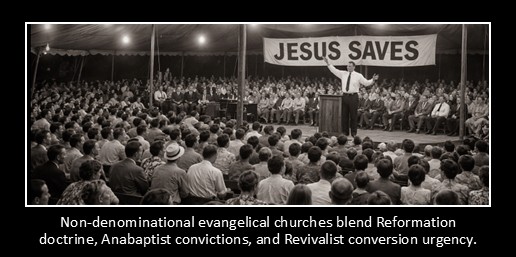
Non-denominational evangelical churches blend Reformation doctrine, Anabaptist convictions, and Revivalist conversion urgency.

Most modern non-denominational evangelical churches are not “theologically blank.” In practice, they tend to share four core commitments that were inherited from previous movements based on the early church in Continue ReadingA Short History of Modern Non-denominational Evangelical Churches

Family Seating This Way at the Welcoming Church

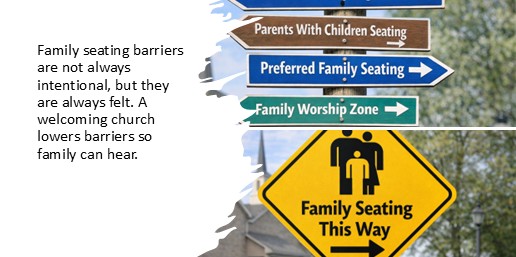
Family seating barriers are not always intentional, but they are always felt. A welcoming church lowers barriers so family can hear.

A welcoming church does not begin with policies, but with posture. When Jesus saw children being pushed aside, “He was indignant” and said, “Let the little children come to Me, Continue ReadingFamily Seating This Way at the Welcoming Church

Innate Faith, Human Ability, and Divinely Strengthened

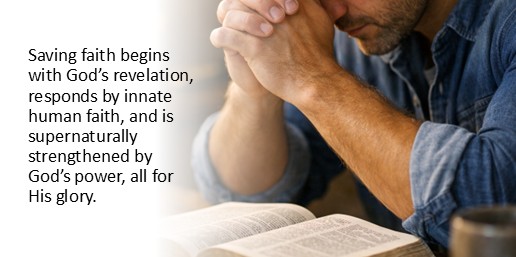
Saving faith begins with God’s revelation, responds by innate human faith, and is supernaturally strengthened by God’s power, all for His glory.

Faith is one of the most frequently used and least carefully defined words in Christian conversation. We are saved by faith, we walk by faith, and Scripture praises great acts Continue ReadingInnate Faith, Human Ability, and Divinely Strengthened

The Aorist Tense of Present Your Bodies a Living Sacrifice

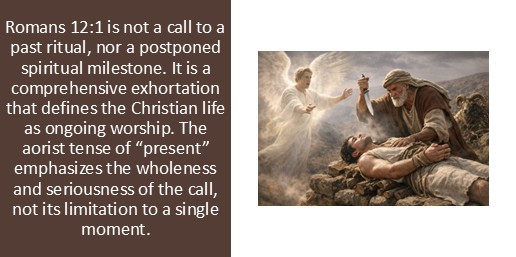
Romans 12:1 is not a call to a past ritual, nor a postponed spiritual milestone. It is a comprehensive exhortation that defines the Christian life as ongoing worship. The aorist tense of “present” emphasizes the wholeness and seriousness of the call, not its limitation to a single moment.

Many commentators describe the aorist tense of “present” (παραστῆσαι) in Romans 12:1 as a one-time act that is finished and done. While this explanation is common, it often reflects a Continue ReadingThe Aorist Tense of Present Your Bodies a Living Sacrifice